
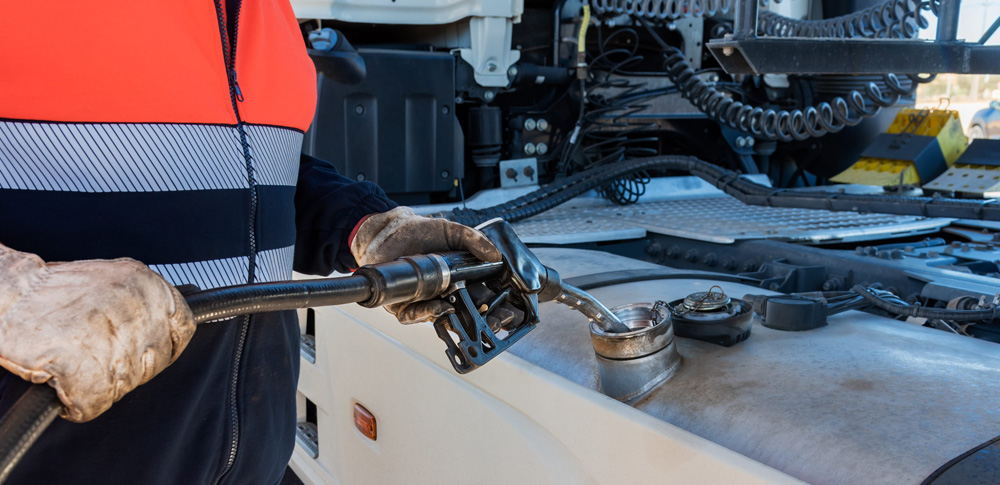
IFTA fuel tax reporting is the quarterly return interstate carriers file with their base state to settle fuel taxes across every U.S. state and Canadian province they drove through. You report miles and gallons by jurisdiction, pay what you owe, and keep the records for four years. Clean fuel card data and GPS mileage do most of the work.
Each return is due the last day of the month after the quarter ends. If that day falls on a weekend or legal holiday, file by the next business day.
The short version
- Who files: any business running a qualified motor vehicle in two or more IFTA jurisdictions. That means a power unit over 26,000 pounds, three or more axles, or a combination over 26,000 pounds.
- When: four returns a year, due April 30, July 31, October 31, and January 31. You file even in a quarter with no interstate miles.
- What you need: miles by jurisdiction for every qualified vehicle, plus a receipt or transaction record for every gallon, tied to the vehicle that burned it.
- What it costs to get wrong: late returns carry a penalty of $50 or 10% of the tax due, whichever is greater, plus interest. Poor records in an audit can get your fleet MPG reset to 4.00.
- Rule change effective January 1, 2027: IFTA members approved a change requiring third-party transaction listings used for tax-paid credit to come from the fuel card system that processed the purchase.
If you run trucks across state lines, IFTA is one of those jobs that is simple on paper and messy in real life. The math is straightforward. The hard part is walking into the end of a quarter with every mile and every gallon already accounted for, instead of chasing faded receipts and reconstructing routes from memory.
We have worked with fleet operators since 1989, and the pattern is consistent. Fleets that struggle with IFTA rarely have a math problem. They have a records problem. This guide covers how the reporting works, what auditors look for, what changed for 2027, and how to set up your fuel and mileage data so the quarterly return takes an afternoon instead of a week.
This guide is general information, not tax or legal advice. Your base jurisdiction has the final word on filing requirements, so confirm specifics with them or your tax preparer.
What is IFTA fuel tax reporting?
The International Fuel Tax Agreement (IFTA) lets a motor carrier hold one fuel tax license from its home state and file one quarterly return, instead of dealing with every state it drives through. The return shows miles and fuel for each jurisdiction, and your base state collects or refunds the difference and passes the money to the other members.
IFTA members are the 48 contiguous U.S. states and the 10 Canadian provinces. Alaska, Hawaii, and Washington, D.C. are not members, and neither are Yukon, the Northwest Territories, or Nunavut. Miles you drive there are reported as non-IFTA miles.
- Base jurisdiction
- The state or province where your qualified vehicles are registered and your operational records are kept. You get your license and decals here, and this is where you file.
- Qualified motor vehicle (QMV)
- The type of vehicle IFTA covers. The exact definition is in the next section.
- Tax-paid gallons
- Fuel you bought at retail, where the state tax was already built into the pump price. You get credit for this tax on your return, but only if you can prove the purchase.
- Taxable gallons
- The fuel you are considered to have burned in each jurisdiction. It is calculated as miles driven in that jurisdiction divided by your fleet’s average MPG.
- Net tax
- For each jurisdiction, the tax on taxable gallons minus the tax you already paid at the pump. Positive means you owe that state. Negative means a credit.
Who needs an IFTA license?
You need an IFTA license if you operate at least one qualified motor vehicle in two or more member jurisdictions. Under Section R245 of the IFTA Articles of Agreement, a vehicle qualifies if it is used, designed, or maintained to transport people or property and meets any one of three tests.
| Test | What it means in practice |
|---|---|
| Two axles and over 26,000 lbs | Gross vehicle weight or registered gross vehicle weight above 26,000 pounds (11,797 kg). Most Class 7 and 8 straight trucks. |
| Three or more axles | Qualifies at any weight. Many tandem-axle dump trucks, tri-axles, and tractors. |
| Combination over 26,000 lbs | The power unit plus what it tows exceeds 26,000 pounds by gross or registered weight. This is the one service fleets miss. |
Recreational vehicles used only for personal pleasure are excluded. Intrastate-only fleets do not need IFTA, though your state may have its own fuel tax rules.
The combination rule catches a lot of contractors. A landscaping, construction, or agriculture crew running a heavy-duty pickup with a loaded equipment trailer can easily pass 26,000 pounds combined. If that rig crosses into a neighboring state for a job, it is a qualified vehicle, even though nobody at the shop thinks of themselves as a trucking company.
Does this vehicle need IFTA?
Result
At two axles, 14,000 lbs, and 24,000 lbs combined, this vehicle is under every IFTA threshold. Recheck if it starts towing heavier loads, since a heavier trailer can push the combination over 26,000 pounds.
Based on the R245 definition in the IFTA Articles of Agreement. This is a quick screen, not a legal determination. Your base jurisdiction makes the final call.
IFTA filing deadlines
IFTA returns are due on the last day of the month after each quarter ends: April 30, July 31, October 31, and January 31. If that date is a weekend or legal holiday, the return is on time when filed the next business day.
| Quarter | Reporting period | Due date |
|---|---|---|
| Q1 | January 1 to March 31 | April 30 |
| Q2 | April 1 to June 30 | July 31 |
| Q3 | July 1 to September 30 | October 31 |
| Q4 | October 1 to December 31 | January 31 of the following year |
Check the calendar each quarter. If October 31 lands on a Saturday, for example, the third-quarter return is on time when filed the following Monday. Holiday closures vary by jurisdiction, so confirm with your base state if a due date falls near a holiday.
Annual license renewal
IFTA licenses and decals run on the calendar year. File your renewal with your base jurisdiction before December 31. Renewed credentials can be displayed starting November 1, and there is a grace period through the end of February to get the new decals on every truck, as long as the renewal was filed on time. Remember that renewing does not replace your fourth-quarter return, which is still due January 31.
What records do you need for IFTA?
You need two sets of records for every qualified vehicle: distance records showing miles driven in each jurisdiction, and fuel records proving every gallon purchased. Both must be kept for four years from the return’s due date or filing date, whichever is later.
Distance records
Auditors want trip-level detail for each vehicle: dates, starting and ending odometer readings, route of travel, total miles, and miles in each jurisdiction. Paper trip sheets still work, but electronic records from a GPS or telematics device are allowed as long as the underlying data is kept and available for audit. That supporting data matters. A summary report with no location readings behind it will not hold up.
Fuel records
To claim credit for tax you paid at the pump, each retail purchase needs a receipt, invoice, credit card receipt, or transaction listing that shows seven specific things. Missing any one of them can cost you the credit for that fill-up, which means paying tax on those gallons twice.
| Required element | Common paper receipt problem | With a fleet fuel card |
|---|---|---|
| Date of purchase | Thermal paper fades within months | Stored electronically on every transaction |
| Seller’s name and address | Small stations print partial addresses | Station name and location recorded |
| Quantity purchased | Usually fine if the receipt survives | Gallons captured at the pump |
| Fuel type | Sometimes printed as a product code | Fuel grade captured |
| Price per gallon or total | Usually fine | Captured |
| Vehicle identification | Almost never printed. Drivers are supposed to write the unit number on it by hand | Tied to the vehicle when the card is assigned to that truck, or when the driver enters a vehicle ID |
| Purchaser’s name | Missing on cash and personal card purchases | Your business account |
Prepaid receipts, and card statements that don’t itemize each purchase, are not accepted as proof of tax paid. If you keep bulk fuel on site, you also need delivery receipts, withdrawal records by vehicle, and quarterly tank reconciliations, tracked separately from retail purchases.
The vehicle identification line is where most fleets lose credits. A driver pays with a personal card, forgets to write the truck number on the receipt, and that purchase is no longer tied to a qualified vehicle. With a fleet card assigned to each truck and an individual PIN for each driver, the link between the gallons and the vehicle is recorded automatically.
The January 1, 2027 fuel record rule
At the August 2026 annual business meeting, IFTA members approved Ballot #4, which amends Procedures Manual Section P550.220.015. Transaction listings used to support tax-paid credits must be generated by the fuel card system that was involved in the original purchase.
IFTA’s audit committee explained the reason: some jurisdictions had been accepting summaries built by companies that had nothing to do with processing the purchase. Going forward, the record has to come from the system that actually authorized and recorded the transaction.
In practical terms, a transaction listing exported directly from your fuel card account is the kind of record this rule is built around. A spreadsheet somebody rebuilt from statements, or a report pulled from an unrelated app, is on shakier ground. It is a good time to confirm that you can export itemized transactions straight from your card account, and to ask your base jurisdiction how it will apply the change.
How to prepare a quarterly IFTA return
To prepare an IFTA return, total your fleet’s miles and gallons for the quarter, divide to get fleet MPG, convert each jurisdiction’s miles into taxable gallons, then subtract the tax-paid gallons you bought there. Multiply the difference by that jurisdiction’s current rate and file the totals with your base state.
-
Pull miles by jurisdiction for every qualified vehicle
Run the quarter’s distance report from your GPS or telematics system, or total your trip sheets. Include non-IFTA miles and any toll road miles your base state asks for separately. Total fleet miles has to include every mile your qualified vehicles drove, taxable or not.
-
Pull every fuel purchase for the same vehicles
Export the quarter’s transactions from your fuel card account, then add any receipts from purchases made off the card. Add bulk fuel withdrawals if you run an on-site tank. Leave out fuel that went into vehicles that are not IFTA-qualified.
-
Reconcile before you calculate
Look for fuel purchases in states where the truck shows no miles, and for long stretches of driving with no fuel purchases at all. Check each vehicle’s MPG for outliers. A truck showing 11 MPG usually means missing fuel records, and auditors are trained to flag unusual trends and variances like that.
-
Calculate fleet MPG
Divide total miles by total gallons for all qualified vehicles combined. IFTA uses a fleet average, not a per-truck figure.
-
Convert miles to taxable gallons in each jurisdiction
For each state or province, divide its taxable miles by your fleet MPG. That is how much fuel you are considered to have burned there.
-
Figure net gallons and net tax
Subtract the tax-paid gallons you bought in each jurisdiction from its taxable gallons, then multiply by that jurisdiction’s rate for the quarter. Rates change quarterly and some jurisdictions add surcharges, so pull the current figures from the IFTA tax rate matrix.
-
File and pay with your base jurisdiction
Most base jurisdictions accept electronic filing, and many require it. The net of all jurisdictions is either a payment or a credit. File a return even if you had no interstate operations that quarter.
-
Archive the whole quarter
Save the return, the distance data, and the fuel transactions together by quarter. You will need all of it for four years.
A worked example
Say a three-truck fleet based out of the Charleston area runs into two neighboring states. For the quarter it drove 36,000 IFTA miles and bought 6,000 gallons, so the fleet MPG is 6.0. The table below uses illustrative round-number tax rates to show how the math works.
| Jurisdiction | Miles | Taxable gal (miles ÷ 6.0) | Tax-paid gal bought | Net gal | Example rate | Net tax |
|---|---|---|---|---|---|---|
| Home state (base) | 18,000 | 3,000 | 3,500 | −500 | $0.30 | −$150.00 |
| Neighbor state 1 | 10,000 | 1,667 | 1,500 | 167 | $0.40 | $66.67 |
| Neighbor state 2 | 8,000 | 1,333 | 1,000 | 333 | $0.35 | $116.67 |
| Total | 36,000 | 6,000 | 6,000 | 0 | $33.33 due |
Notice what happened. The fleet bought more fuel at home than it burned there, so it earned a credit that offset most of what it owed the neighbors. That credit only exists if the home-state receipts are complete. Lose a few of them and the credit shrinks while the amounts owed elsewhere stay the same.
IFTA return estimator
Enter your quarter’s totals and a row for each jurisdiction. It starts with the example above. Replace the example rates with current ones from the IFTA tax matrix.
| Jurisdiction | Taxable miles | Tax-paid gallons | Rate ($/gal) | Taxable gal | Net tax | Remove |
|---|---|---|---|---|---|---|
| 3,000 | -$150.00 | |||||
| 1,667 | $66.67 | |||||
| 1,333 | $116.67 |
Planning estimate only. It leaves out surcharges, interest, and jurisdiction-specific rules. Your filed return uses the official rates for the quarter.
IFTA penalties, interest, and audits
A late, missing, or underpaid IFTA return carries a penalty of $50 or 10% of the delinquent tax, whichever is greater, plus interest owed to each jurisdiction. If an audit finds your records inadequate, your base state can reset your fleet MPG to 4.00 or cut it by 20%, which can raise your tax bill far more than the penalty itself.
Late filing
The $50 minimum applies even when your return shows zero tax or a credit. Interest is figured on the amount due to each individual jurisdiction, not on your net balance, so it can end up larger than the net amount you owe. Repeated late filing can lead to suspension or revocation of your license, and running without valid credentials means buying trip permits for every jurisdiction.
Audits
Under IFTA rules, each jurisdiction audits an average of 3% of its licensees every year. A 2026 proposal to lower that to 2% failed, so the 3% standard stays. The audit covers your distance records, your fuel records, and whether the two agree.
The real exposure is the inadequate records assessment in Procedures Manual Section P570. If your records do not hold up for the fleet as a whole, the auditor either drops your fleet MPG to 4.00 or reduces it by 20%. A lower MPG means more taxable gallons in every jurisdiction, on every quarter in the audit period.
What weak records could cost
Taxable gallons per year
Rough illustration of an inadequate records assessment under P570, before penalties and interest. Audits usually cover several years of returns, so multiply accordingly. Your base jurisdiction chooses the method.
Paper receipts vs. fuel cards vs. fuel cards with GPS
A fleet fuel card solves the fuel side of IFTA by recording every purchase with the details auditors require. GPS telematics solves the mileage side by logging miles in each jurisdiction automatically. Together they cover both record sets that IFTA asks for.
| Record type | Paper receipts and trip sheets | Fleet fuel card | Fuel card plus Geotab |
|---|---|---|---|
| Fuel records | Depends on drivers saving every receipt | Every card purchase recorded automatically | Every card purchase recorded automatically |
| Link to the vehicle | Unit number written by hand, if at all | Card assigned to the truck or driver enters a vehicle ID | Same, plus fuel matched against the truck’s location |
| Miles by jurisdiction | Manual trip sheets | Still manual | Calculated from GPS and odometer data |
| Quarter-end work | Days of sorting and data entry | Export fuel, total up mileage | Run reports, review, file |
| Audit readiness | Weak. Receipts fade and go missing | Strong on fuel, weaker on distance | Strong on both |
| Biggest risk | Lost tax-paid credits and an MPG reset | Mileage gaps and estimates | Device errors if units are swapped between trucks without being reassigned |
Common mistakes that cost fleets money
- Letting drivers fuel on personal cards or cash, then losing the receipts or forgetting the unit number.
- Leaving out fuel purchased in the base state, which throws away the credit that offsets what you owe elsewhere.
- Mixing fuel for non-qualified vehicles, like pickups that never tow heavy, into the IFTA totals.
- Rounding or estimating miles instead of using recorded distance.
- Skipping the zero return in a slow quarter.
- Keeping records for a year or two. IFTA requires four.
How Fuel Express helps with IFTA records
Fuel Express gives fleets a fuel card that records every purchase, is accepted at more than 230,000 fueling locations, and pairs with Geotab telematics for miles by jurisdiction. You still file with your base state, but the records you file from are already organized.
Fewer off-card fill-ups
Every purchase made on a personal card or with cash is a receipt someone has to save and label. With acceptance at 230,000+ fueling locations plus 90,000 maintenance locations, drivers can fuel wherever they already are on the route. Use the merchant locator to check stops ahead of time.
Every gallon tied to a truck
Assign a card to each vehicle and give every driver an individual PIN, or assign cards to drivers. Restrict cards to fuel only if you want the cleanest IFTA data. A representative sets up your controls before any card is used.
Records you can pull any time
Purchases post to your online account in real time with the station, date, gallons, fuel grade, driver, and vehicle. Pull the quarter’s transactions straight from the account that processed them, which is what the 2027 rule change is built around. See how spending monitoring works.
Miles by jurisdiction from Geotab
Through our Geotab compliance solutions, fuel tax miles compile automatically. The MyGeotab IFTA report shows distance by vehicle in each state and province, and fuel card transactions can be imported into it. The same system runs the FMCSA-registered Geotab Drive ELD.
There are no startup fees, no annual fees, and nothing hidden, and our customer service team is available 24/7. If you are comparing providers, our fleet fuel card comparison lays out acceptance, fees, and controls side by side.
IFTA reporting FAQs
Who has to file IFTA?
Any business that operates at least one qualified motor vehicle in two or more IFTA member jurisdictions. A vehicle qualifies if it has two axles and weighs over 26,000 pounds, has three or more axles at any weight, or runs in a combination that exceeds 26,000 pounds.
When are IFTA returns due?
April 30, July 31, October 31, and January 31, covering the quarter that just ended. When a due date falls on a weekend or legal holiday, the return is on time if filed the next business day. For example, when October 31 is a Saturday, the third-quarter return is due the following Monday.
Do I have to file if my trucks didn’t leave the state this quarter?
Yes. As long as you hold an IFTA license, you file every quarter, even if the return shows no interstate miles. Missing a zero return still triggers the $50 minimum penalty.
What is the penalty for filing IFTA late?
$50 or 10% of the delinquent tax, whichever is greater, plus interest calculated on the amount due to each jurisdiction. Repeated failures to file or pay can lead to license suspension or revocation.
How long do I have to keep IFTA records?
Four years from the due date of the return or the date it was filed, whichever is later. That includes distance records, fuel receipts or transaction listings, and bulk fuel records.
Can fuel card records replace paper receipts?
Yes, if each transaction shows the date, seller name and address, gallons, fuel type, price, vehicle identification, and purchaser. Card statements that don’t itemize each purchase do not count. Starting January 1, 2027, third-party transaction listings used for tax-paid credit must be generated by the fuel card system that processed the purchase.
Can I use GPS or an ELD for IFTA mileage?
Yes. IFTA allows electronic devices to record distance by jurisdiction as long as the supporting data, such as location readings, odometer readings, and routes, is kept and available for audit. The Geotab IFTA report calculates distance per vehicle in each jurisdiction from GPS and odometer data.
Does a pickup towing a trailer need IFTA?
It can. If the truck and trailer together exceed 26,000 pounds by gross or registered weight, and the combination crosses into another member jurisdiction, it is a qualified motor vehicle. This comes up often for landscaping, construction, and agricultural fleets.
Which states and provinces are not part of IFTA?
Alaska, Hawaii, and Washington, D.C. in the U.S., and Yukon, the Northwest Territories, and Nunavut in Canada. Mexico is not a member either. Miles driven in those places are reported as non-IFTA miles.
Does Fuel Express file my IFTA return?
No. Your return is filed with your base jurisdiction, either by you or by your tax preparer. Fuel Express provides the fuel transaction records and, through Geotab, the mileage by jurisdiction that the return is built from.
Start next quarter with records that are already organized
A short application with no obligation. A Fuel Express representative will help you set up cards by vehicle, purchase controls, and reporting that fit how your fleet runs, including Geotab if you need mileage by jurisdiction.


